Tuesday, July 24

Why Supply Side Economics Doesn't Work: An Intro

From Alex Berenson, NY Times, 7/24:

"

Tax Break Used by Drug Makers Failed to Add Jobs


Two years ago, when companies received a big tax break to bring home their offshore profits, the president and Congress justified it as a one-time tax amnesty that would create American jobs

Drug makers were the biggest beneficiaries of the amnesty program, repatriating about $100 billion in foreign profits and paying only minimal taxes. But the companies did not create many jobs in return. Instead, since 2005 the American drug industry has laid off tens of thousands of workers in this country.

And now drug companies are once again using complex strategies, many of them demonstrably legal, to shelter billions of dollars in profits in international tax havens, according to their financial statements and independent tax experts.

In one popular accounting move, companies declare their foreign markets as far more profitable than their American businesses — even though drug prices are typically higher in the United States than anywhere else in the world.

Drug makers are not the only American multinationals using tax loopholes to declare large portions of their income beyond the reach of the Internal Revenue Service. The Brookings Institution estimates that multinational companies are using overseas tax shelters to lower their payments to the Treasury by about $50 billion a year.

But the drug industry accounts for one of the biggest portions of that shortfall, according to the I.R.S. and independent tax experts. And the nature of their business gives drug makers techniques, like sheltering valuable pharmaceutical patents in tax-friendly havens like Ireland, that many other industries cannot use.

Moreover, the sheer heft of the American drug industry, which had about $60 billion in pretax profits last year, can give disproportionate weight to the economic impact of its tax sheltering techniques.

Even though the tax amnesty legislation has expired, its passage encouraged companies to be even more aggressive about sheltering money, expecting another holiday in the future, said H. David Rosenbloom, director of the international tax program at New York University. Democrats and Republicans supported the legislation, which passed with sizable majorities in October 2004.

“Congress can swear on two stacks of Bibles that it’ll never do it again,” Mr. Rosenbloom said, “but they’ve lost their virginity.”

With a few narrow exceptions, the drug companies are supposed to be paying as much as 35 percent of their worldwide profits in United States federal taxes. In reality they pay much less.

Last year, for example Eli Lilly, the sixth-largest American drug maker, paid less than 6 percent of its profits of $3.4 billion to the United States government, according to its financial statement.

Amgen, the American biotechnology giant, which reported last year that 80 percent of its $14.3 billion in sales occurred in this country, paid about 22 percent in United States federal tax on its $4 billion in profits.

The discrepancy was possible because Amgen claimed a profit margin of almost 100 percent on its foreign sales, but only 15 percent on its American sales.

The I.R.S. has recently increased the number of examiners trying to find hidden profits overseas. It has even had some victories, as in February when the drug maker Merck agreed to pay $2.3 billion to the government to settle a claim it had hidden profits in a Bermuda partnership.

“This is really a priority for the service right now — there’s a lot of focus on cross-border transactions,” said Frank Y. Ng, the I.R.S. deputy commissioner for international tax matters. But even after adding resources, the I.R.S. has only about 500 examiners to review international returns.

Lilly said in a statement that it complied with the law in taking advantage of the 2005 tax amnesty, which enabled the company to avoid more than $2.3 billion in American taxes. Lilly said it believed that the 2005 tax break had encouraged investment in the United States, noting that the company, which is based in Indianapolis, has invested $1.3 billion in the state of Indiana alone.

Still, since the beginning of 2005, Lilly has cut its United States work force by more than 8 percent, reducing it to 22,000 jobs by last January.

Lilly also noted that its overall reported worldwide tax rate for 2006 — which includes taxes paid to other countries and taxes that it has deferred but will theoretically pay at some future date — was about 20 percent in 2006.

Pfizer, Merck and Amgen declined requests for comment.

Tax experts like Michael J. McIntyre, a law professor at Wayne State University in Detroit, say the drug makers are taking advantage of antiquated rules that work better for manufactured products like steel and automobiles.

Under this system, when companies transfer products between divisions in different countries, they must account for the sales internally through “transfer pricing.” But they have significant discretion in how they set prices for these transactions.


That turns out to be especially so for high-margin products like drugs, which in pill form cost only a few cents each to make once they have been invented, but can be sold for several dollars apiece. The hefty profit margins result in part from patents that can protect the drugs from competition for years. And by transferring those valuable patents overseas, companies can declare that their profits should follow the patents overseas as well.


Under the rules of transfer pricing, if a company moves patents or other so-called intangibles from its United States division to a foreign subsidiary, the foreign unit is supposed to pay the American division a fair-market price. But outsiders have a difficult time determining if companies have properly assessed the value of patents, trademarks and other intangible properties.

To further complicate matters, some corporate subsidiaries in tax-haven countries, like Singapore and the Netherlands, now directly finance research in the United States. So they own the patents without ever having to “buy” them from their American parents, Mr. McIntyre said.

“They don’t even have to push it offshore,” Mr. McIntyre said. “It’s already offshore. And once it’s offshore, they strip the income from the onshore activity.”

In theory, companies are only deferring taxes on the profits they shelter overseas, not permanently avoiding tax. If they bring the money back to the United States to distribute to their shareholders, they still have to pay American taxes on it.

But those rules were temporarily suspended when President Bush signed legislation in 2004 to let companies return overseas profits at a rate of 5.25 percent, far below the official tax rate of 35 percent, if they moved the money back by 2006.

During that period, multinational companies of all stripes moved a total of about $300 billion into the United States, avoiding about $90 billion in taxes. Among them, the pharmaceutical industry was the largest single beneficiary. Leading the pack was Pfizer, the world’s largest drug company, which repatriated $36 billion.

The quid pro quo was supposed to be that the drug industry would invest some of its tax windfall in American operations and jobs. Instead, struggling with a dearth of new blockbuster drugs, they have had mass layoffs. Again, Pfizer has been the leader, reducing its work force by about 8,000 in 2006 and saying early this year that it would lay off an additional 10,000 employees.

Some experts now say the current system of taxing overseas profits should be scrapped. Even the companies that take advantage of loopholes might benefit if the system were changed, because they could save money on tax planning and have more certainty that the I.R.S. would accept their returns, said Michael C. Durst, a former I.R.S. official who is now special counsel to the law firm Steptoe & Johnson.

The simplest solution, Mr. Durst said, would be shifting to a system in which companies would assign a portion of profit to each country where they made a sale, relative to the size of the sale. Instead of trying to tax profits made overseas, the United States government would simply take its share of the profits on American sales. Such a system would be harder for the companies to game, Mr. Durst said.

But he and other tax experts say that any effort to close loopholes, to be politically viable, might have to be combined with a lowering of the corporate tax rate from its current 35 percent. And no one expects any legislation of that sort, at least not before the next election."


Sunday, July 22

Torture


This one will be short and to the point...

The issue of torture has been in and out of the news recently and particularly has shown up in Republican presidential debates. There have been numerous allegations of use of torture in Guantanamo Bay and through repressive regimes in Egypt, East Europe, and Uzbekistan. Of course there was also the Abu Graib scandal. Some cable news networks have devoted discussions as to whether certain practices (water-boarding, forced standing, sleep deprivation, etc.) should be classified as torture.

Central to any of the recent debates about torture have been two questions:
1. What constitutes torture?
2. Are there situations when the use of torture is permissible?

I believe the first question is irrelevant. The only reason to carefully define torture is in order to inflict punishments that are borderline "not torture." Luckily for us, there is no reason we need to engage in such discussions. This is because the issue was already solved 200 years ago. The Bill of Rights 8th amendment prohibits the use "cruel and unusual punishment." Thus, we don't need to define torture, we need to define cruel and unusual punishment. I'll leave that to the courts, but we all know that all of the borderline practices being practiced in Guantanamo ARE cruel and unusual. As such, they are illegal if they are being inflicted on U.S. citizens, and should not be practiced if they are being used on enemy combatants. End of story. The entire torture debate is like trying to decide if asking who married Cain is blasphemy: it's completely outside the realms of our legal system and somewhat esoteric.

The second question is not a question at all. It's a rhetorical device. Torture or cruel and unusual punishment should not be used at all by anyone. Additionally, it is illegal for our government to use it against its citizens and illegal under international law (to the extent that international law has any jurisdiction in the United States) to use it against enemy combatants. Yet, talking heads keep asking the hypothetical question that goes something like this: "Suppose we caught a member of a terrorist cell trying to attack a major metropolitan area. Should we tie our hands and not allow intelligence personnel to use whatever means necessary to figure out the details of the plans even if it would cost perhaps thousands of American lives?" It's a nice little question that has no relation to reality and seems like a good plot for an action movie. Such a scenario has never happened and probably will never happen. If it does happen, you can bet that the terrorist will be subjected to "any means necessary" to get him to talk. After the torture, whoever green-lighted it would probably be absolved. In reality, it's a non-issue with such a specific set of circumstances that it is almost meaningless. So why does it keep coming up? Because they understand that the slippery slope goes both ways. Because torture in some outlandish scenario would be somewhat reasonable, one could argue that it could be justified in other, more realistic scenarios. Before you know it, "terrorists" are being tortured for all kinds of rationales. Asking the question is an argumentative tool for convincing people that torture is ok. Of course, in specific circumstances just about any action could be justified to some degree, but that doesn't give it legitimacy as public policy. Torture, as a matter of principle, should never be used for any purpose.

Saturday, July 21

Monthly Machiavelli's: A New Feature?


Yes!, a NEW feature on this site. Every month I will award a "Machiavelli" to the person who displays 'Outstanding Political Acumen.'

I was going to wait until the end of the month, but I'll just start prematurely with the first recipient of the award.


And the Machiavelli goes to....:


Senate Majority Leader Harry Reid! [Cheers]

Why he won: As majority leader, Reid organized the overnight debate and vote in the senate over withdrawal from Iraq. From a Machiavellian standpoint, this was absolute genius. A number of Republican senators recently had been defecting from the President's position in Iraq because...well, they'll probably be voted out of office if they hadn't. Despite the "bravery" of openly and belatedly proclaiming that everything in Iraq wasn't peachy pie, most were not willing to push for immediate withdrawal.

In response, Reid put them on the spot, forcing them into an all-night filibuster. Republicans were forced to either vote for immediate (actually by April 2008) withdrawal or support the president. Since most of those Republicans really wanted some make-believe middle course, they were not happy about having to take sides. Most decided to prevent an open vote and continue the filibuster, which can be translated to support for the President's war.

The reason why this move was so brilliant is that it forces the Republicans in the senate, and Republicans in general (including presidential candidates) to become attached to Bush's wildly unpopular position in Iraq. Additionally, it strengthens Democrats credentials as the 'get out of Iraq' party, which is politically wise. To prevent compromise measures that would have allowed Republicans senators to separate themselves from Bush, Reid announced that there wouldn't be any more debate on Iraq until September.

Well done.

Thursday, July 19

Cuba


Michael Moore's recent documentary has redrawn some attention to Cuba. In the movie, Moore takes several 9/11 rescue workers to Cuba to receive medical care. Those rescue workers were refused care by the U.S. government despite the fact that they were harmed during rescue attempts and not told about the dangers to their respiratory system from working so long around the WTC rubble. In Cuba, the rescue workers simply walked into a local pharmacy and then a hospital in Havana to receive free state-of-the-art medical care. For his transgressions, Michael Moore is being investigated for breaking American law by visiting Cuba without permission.

The point of this post is not to talk about Cuba's health care program. The point is to talk about the insanity of our current trade embargo and visiting restrictions on the country. But before I get to that, I want to talk a little about health care in Cuba. The documentary has spawned a reaction form both conservative and mainstream media trying to debunk the myths supposedly perpetuated by Moore in the film. I'll just say it: these "journalists" don't know what they're talking about. They assume that because it's Castro's Cuba, the country could not possibly have a comparable if not better health care system than the United States. There must be some hidden evil. A basic exploration of the country would prove otherwise: Cuba has devoted itself to building an exemplary health and educational system that some Americans would find envious. They have done this by sacrificing GDP growth. You may argue that the cost is too high, but if people are being educated, protected, and remain healthy, who's to say they're worse off? Not only has Cuba provided for its citizens, but it has also sent health workers all across the third world to train and treat the impoverished. It has also brought in people from across the world to train in its prestigious Havana University so that they may return home and use their acquired knowledge in their homeland. In fact, many young Americans have chosen to attend the university in what they believe is a unique educational experience. Many "journalists" have pointed out ways in which Cuba's educational or health care system is inferior (for example, there is only one place in Cuba to really receive this top-shelf medical care--Havana, where Moore goes, although anyone can go there and there are local doctors and pharmacies everywhere), but they neglect to mention that the U.S. is the richest country in the world, while Cuba is one of the poorest, with a GDP per capita of $2,000 and that for Cuba to have a system that in any way compares to the most powerful country on earth is laughable.

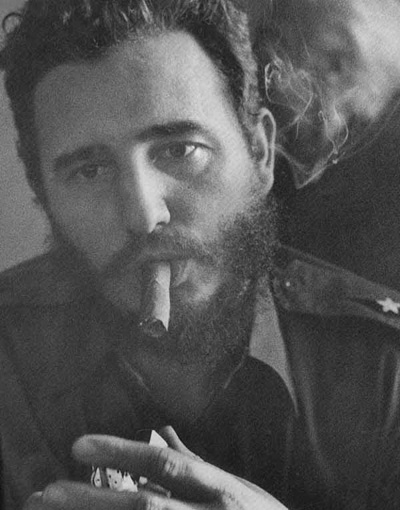
So, if Cuba isn't evil incarnate, why do we have such strict trade and visiting restrictions? Let's look at the history: in 1959, Castro overthrew a dictator supported by the United States named Batista. Batista was one in a long run of dictators in Cuba that had ruled pretty much none stop since the United States "freed" the island from Spanish tyranny during the Spanish-American War in 1898. When Castro took power, America was not sure what to think. They had never been confronted with a victorious political movement in Cuba that they had not directly sponsored. I'm no communist, and neither was Castro. Castro's main goal was to redistribute Cuba's oligopolized land, establish an educational and health care system, and end Cuba's economic dependence on American purchase of Cuban sugar. He made several diplomatic attempts to work with America in reforming his nation.

However, those feelers were rejected by America. Instead, the U.S. placed an embargo on Cuban sugar, crippling the economy. Castro then traveled to America to try to smooth things over to no avail. It was during this trip that the CIA first attempted to assassinate him. They failed, but Castro found out about it.

It was only after Castro's visit to the U.S. that he even contacted the Soviet Union. Why would he turn to the communists that he had worked so hard to purge from his movement during the revolution? Because the U.S. was trying to kill him! The U.S. was also trying to depose Castro using Cuban exiles in what would become the Bay of Pigs debacle.

Let's look at these Cuban exiles. These "exiles" came in three groups. The first were not exiles at all...they simply ran away. Mostly Batista collaborators and EXTREMELY wealthy sugar plantation owners/ Havana nightclub and casino owners with close links to the American mafia, they had fled because they feared their immense wealth would be ceased by the state and they hated anyone with a hint of leftism. The second group were exiled in the sense that if they didn't leave, they would have been jailed or killed. Again these were often extremely wealthy individuals who had been exploiting agricultural workers for immense financial gain. Albeit, conservatives (basically those that were in or were associated with the military) were also persecuted and fled. What is remarkable about this group was how 'white' these early exiles were. Cuba, then, was strictly divided between its white and "mixed" populations. For the most part, the whites owned all the land and the "mixed" did all the work. The whites were mostly old Spanish creole landowners with a scattering of former American families that fled the South after the Civil War. Fearing attacks from the people that had ruled over for decades, these whites fled to America and began organizing a way to overthrow Castro and his egalitarian message...this would become the Bay of Pigs.

I'll talk about the third group later, so let's go back to why Castro approached the Soviet Union. As I pointed out, the U.S. attempted to kill Castro and would launch an entire campaign throughout the 1960s dedicated to that purpose called Operation Mongoose (documents were completely declassified earlier this month, but they were already widely known), which used everything from poisoned food to exploding cigars. The U.S. was also threatening to invade the island or at least support a takeover attempt by Cuban exiles. Castro and Cuba did not have many resources. To protect itself from America it only had one option: the Soviet Bloc. The Soviets were more than happy to give Cuba everything it wanted if nothing else than to irk America. The Soviets gave Cuba arms, trade deals, and finally nuclear missiles (which gave us the Cuban missile crisis).

In response the United States placed a complete trade embargo on Cuba which included tourism and necessarily meant that Americans could not visit the island. It is this embargo that remains with us today. Until 6 years ago, Americans could not go to Cuba for any reason. Now, with special permission, you may visit the island for educational purposes (basically you have to be a med student or grad student studying Latin American politics or something.) This embargo has remained as the only absolute embargo on any country in the world by the United States despite the fall of communism in 1989 and despite the fact that we have most favored nation status with China, a country actually ran by a communist party.

So the question is, why do we hate Cuba so much? As the argument goes, Cuba is an oppressive regime and only a trade embargo will force Castro out of power. Anyone who believes this doesn't know what they're talking about. Firstly, simple trial and error of 50 years should tell us that the embargo will not force Castro from power. It obviously hasn't worked.

Secondly, I don't argue that Cuba is an oppressive country or that it's leader is a corrupt megalomaniac (some estimates put Castro as one of the 20 richest people in the world). Castro allows almost no political dissidence. He uses harsh methods including torture to punish his enemies. In all likelihood thousands of political prisoners have been killed by his regime.
But let's make an incomplete list of countries that the United States has only not placed embargoes upon but has supported and even allied with who were oppressive and used torture as official policy (some of these countries have since reformed, so I'll indicate what period I'm talking about in parentheses when appropriate):

China, Chile (Pinochet), Nicaragua (Somoza), Peru (63-80), Uruguay (73-85), Saudi Arabia, Iran (under the Sha), South Vietnam, Phillipines (Marcos), Indonesia (Suharto), Turkey, Spain (Franco), Portugal (Salazar), Greece (67-75), Argentina (2 military dictatorships), Bolivia (75-80), Brazil (64-85), Guatemala (54-91), El Salvador (32-83), Honduras (50s to 90), Uzbekistan, Romania, Yugoslavia (Tito).

Well, that's all I could think of. The point is that the U.S. since '59 has not had a problem supporting countries with human rights abuses comparable if not worse than those occurring (that occurred) in Cuba. The list includes mostly right-wing military dictatorships, but also includes some lefties like China, Uzbekistan (sorta), and Yugoslavia. In other words, there must be another reason.

So, what's the real reason? One of the real reasons is that the Cuban exiles form a very powerful block of voters and financial resources particularly in the swing state Florida that have forced presidential candidates to remain strictly opposed to Castro and committed to the embargo. Although the initial group of Cuban exiles was relatively small, during the late 1960s and 1970s a flood of Cubans arrived in Florida as refugees constituting the third group I mentioned earlier. Most were not running away from political persecution, although some were, but instead were running away from poverty, ironically caused by the American blockade. Met in Southern Florida by arch-conservative politically active Cubans from the initial fleeing, these "mixed" Cubans that now make up a large majority of the Cuban-American population are equally anti-Castro and have been convinced that the embargo is the best way to punish him. Unfortunately, these ex-Cubans are contributing to the crippling poverty that has struck the country since 1989 as the fall of the Soviet Union not only meant an end to subsidies, but also a viable trade partner (China, as we have learned, are not interested in American much less Cuban goods.)

Instead of blaming the ex-Cubans, we should be blaming the politicians that cowardly continue the ridiculous embargo. President Bush, who will not face another election, could push for an end to the embargo, but he won't because of the harm it will do to his party and possibly the next Bush presidential candidate Jeb Bush (former Gov. of Florida fully committed to making Cuba suffer). Clinton could have done it after 1996, but instead he used his last efforts to pardon ex-Cuban drug smugglers who just happened to reward their legal representatives (Hugh and Tony RODHAM...hmmm...) handsomely for their successful effort to get them clemency.

The embargo doesn't punish Castro, it punishes Cuba and Cubans. Prohibitions against travel to Cuba, with all its harking back to the glorious days of the Soviet Union's migration restrictions, hurts Americans (and Cubans), not Castro. In a post-Cold War world, the embargo is insane. What threat does Cuba give to America? Maybe someone doesn't want you to know about their health and educational system. Maybe someone doesn't want to admit that the Castro problem was an American made problem. Maybe someone is afraid that if they end it now, people will realize there was no reason to have it in the first place.

Wednesday, July 18

Michael Moore Movie Gets Two Thumbs Up


I saw Sicko yesterday and it was very good. Most criticisms of the movie, like those of Fahrenheit 9/11, is that he uses factual inaccuracies. Admittedly, there are a few glaring ones that I immediately noticed, but these do not detract from his core message. Unfortunately, I don't think I learned a single thing from the movie and you could probably learn more from my post, "The Great Health Care Debate." With that said, the movie is well-done and a great wake-up call to all those that think we have decent health care.

Friday, June 29

A Boogie Man Made Up to Scare YOU


There are a few myths, you could call them "boogie men," that have dominated how we think about the future and in doing so have altered how we understand our current political problems. In this post, I'll deal with the death of social security myth.

Particularly during the 2000 election, politicians, journalists, and analysts convinced us that social security was headed on its way to complete disaster. Politicians did this to push their political agenda, journalists did it because it was a great news story, and analysts...well there weren't too many and the only ones that were making noise either weren't being heard or weren't exactly sure what to make of all the commotion. The problem for analysts is that they had long sounded the alarm about social security: that it's basically a glorified pyramid scheme. So, when politicians started pointing to serious shortfalls in the system, they were at first excited that someone was finally listening to them, and then baffled when they realized that those politicians were just making problems up. Explaining why the talk of the death of social security was a myth was confusing and nobody had (or has) the guts to explain why. After Bush's victory, the issue became further confused as he proposed a privatization scheme. Instead of analysts explaining why this was even bigger nonsense, the scheme got shut down by Democrats scaring people into thinking that Bush was trying to ruin social security (which he was) without actually explaining how. Thus, we were left with the idea that social security was in trouble, but that fixing it would be siding with Bush. To sum up, social security was never fully explained to America and any debate surrounding it (from either the left or the right) has centered around the issue of fear. Since fear is powerful, politicians looked everywhere for fear and found it in a good line about how social security would soon be dead. Unfortunately, this is all nonsense.

Where to start? How about the beginning? All good diatribes start with history and this one won't be any different. The social security act was signed into law in 1935 under President Roosevelt during his so-called "Second New Deal." I won't go into the details of why it was created or why it's important, etc. Maybe I'll save that for another diatribe. The important point is that Roosevelt orchestrated the act and that he was a master politician that even Machiavelli would be jealous of. Roosevelt did three things to demonstrate how smart he was (despite the fact that he knew very little): he funded the program with payroll taxes, he separated social security from income taxes, etc., on employee checks, and he sold social security as a government-sponsored insurance system. Why was this so smart? I hoped you would ask:
1. between 1935 and 1952 when Eisenhower embraced the program, republicans/ conservatives put all their energy regarding social security into making it a program financed by the general fund [the general fund refers to all revenue collected by the government]. In other words, they wanted it to be financed like any other program. Why was this so important to them? Simple. By making it an appropriation of the federal government they could cut into it and eventually eliminate as they did with just about every liberal program when Reagan and Bush II took office. But, by placing the funds in a sealed program within the government, conservatives couldn't touch it.
2. By separating social security from other taxes, Roosevelt made sure that wage earners would know exactly where their payroll taxes were going. Thus, when we look at our checks we might think, "what is the government doing with all this money" for our state and federal income taxes, but when we look at the social security tax, we know exactly where the money is going. The gimmick paid off by giving the program a high degree of legitimacy and accountability.
3. by selling the program as a kind of old-age insurance, Roosevelt neglected to tell America that it was a quasi-pyramid scheme. To demonstrate, let me tell you the story of the first person to receive a social security check: Ida May Fuller, a Vermont resident, retired at the age of 66. She had paid $24.75 in payroll taxes when she retired, but like everyone after the program was created, she was entitled to full benefits. As it turned out, she lived to be 101 years old. That meant that she collected $22,888.92. One might ask, "where did all this money come from, if she only paid 24 dollars?" The odd scenario was created because social security payouts are not done through a locked account that you've been paying money into your whole life (as many people think) but out of current employee payrolls. This means that the continued success of the program depends on new entrants into the workforce; a.k.a. a pyramid scheme. Ms. Fuller played the part of the classic 1st entrant in the pyramid, receiving thousands of percents more value than she put it in, as did her entire generation.

As you may know, pyramid schemes get a bad rap. This is because they usually fall apart when there are no more new entrants. Such a scenario WILL someday happen (although it could be at the end of the world) when a whole generation of people who for their entire lives have paid into the system will not receive any benefits. This is the real fault of the social security system. Interestingly, it could happen anytime. It could happen tomorrow if Congress decided to end the program or it could end in 10,000 years. This is the insolvency of social security; it is also the only insolvency of social security...sort of.

But what about the whole end of social security thing? What about projections of a collapse in 2018 or 2041? What about the $11 trillion dollar deficit inherent in the system? Lies, lies, fibs, and half-truths (not in that order). All this talk about the end of social security as we know it began in 1982. In '82, budgetary analysts decided to finally address a major problem with social security: the baby boom generation. The baby-boom seriously upset how the system was financed and it meant that one day, when the baby-boom generation retired, there would not be enough funds to pay them benefits because they would be such a large percentage of the population. A commission headed by a young(er) Alan Greenspan came up with a solution: raise payroll taxes now on the baby-boom generation so that a surplus would be created to meet those demands in the future. And...the problem was solved. Let me say that again: the insolvency created by the baby boom generation has been solved...sort of.

So, why did we hear about it 20 years later as a big problem. For that we have Daniel Patrick Moynihan to thank. Moynhihan, who deserves his own diatribe, was a kind of half-intellectual, half-politician. By that I mean he wasn't a particularly good intellectual or a particularly good politician. In 1998, he headed a study that "discovered" a huge hole in the social security system that would explode in 2011 as the first baby boom generation began to retire. His reasoning was this: those payroll taxes collected for the last 20 years were collected in treasury bills. That means to redeem them, the SSA (social security administration) would have to go to the nation's revenue funds, get the money, and send it out to retirees. He then asked an interesting question, 'given our large deficit, where the hell are we going to get the money to pay the SSA?' hmm..sounds like a big problem...do you have any solutions?...I mean where could the SSA get this money?...it would be like if you put your money in the bank and then the bank used it for a whole bunch of loans...where would you go to get your money back???...


FROM THE BANK!!!!!!! The only reason that social security is not funded by general funds is that Roosevelt worried it could lose legitimacy and be vulnerable, thus he gave it its own funds (overseen by the SSA). The SSA then collects extra money, turns them into treasury bills as the government pays off debt and then gets the money back because it's still money that belongs within the protected funds of the SSA. In fact, to question if the government should pay SSA is not only ludicrous, it is a serious (unintentional) assault on the entire legitimacy of social security. And legitimacy is important for social security because...well, it's a pyramid scheme. Not paying back the SSA would be not paying back all those retirees who have been paying extra money into the system for the last 20 years. In reality, the extra payroll tax was a brilliant ploy because it allowed the treasury to pay less interest on its deficits all those years. Unfortunately, it means that we have been having even BIGGER deficits the last 20 years than previously thought and it means we will have BIGGER deficits in the future as we pay back the SSA. But it is not because of SSA that we have those deficits, in fact, without the SSA our deficits would have been even BIGGER as we would have had more debt to pay interest on (translation: the Reagan deficits were even BIGGER than we were told and the Clinton surpluses really were about breaking even...which is why you never hear about this...neither party wants to tell you how badly they've been doing the last 20 years...)

Moynihan's report drew attention to an issue that didn't really need any. In response, politicians took advantage of the hysteria, apparently realized that Moynihan was crazy, and started scaring people with more problems that weren't problems. In 2000, Gore and Bush gave their solutions to a problem in social security that wouldn't become one until 2041 or 2048, depending on which analyst (called actuaries) you asked. According to the SSA actuaries, around 2048, the surplus built up between 1982 and 2011 will become exhausted. After that date, the SSA would not have enough funds to fully fund the benefits of retirees. This is the "sort of" problem I mentioned earlier with the baby boomers: in the 2040s the children of baby boomers will begin retiring. Coupled with the expected increased life expectancy of the baby boom generation, this will represent a drain on the system. It was a demographic feature not included in the 1982 solution. It is from this problem that Bush and Gore based their programs to save social security.

Before I go through why this is all nonsense, let's go through the Gore and Bush proposals of 7 years ago (remember that back then, before 9/11, there wasn't much to talk about except social security and tax cuts). Gore's solution was the oft-SNL parodied "lock-box." Gore said the way to solve the problem of the 2040s and any future accounting problems would be to create a kind of 'rainy-day' separate fund to rescue social security. He would do this by using the surplus accrued during the Clinton years and by not giving a huge tax break to the wealthy (as Bush would do).

Bush's plan, which he would finally attempt to pass in 2005 following his "presidential mandate" victory in '04, would be to establish private accounts. The whole plan was a bit complicated and even more slimy, so I'll try to go through it quickly. Look at it this way, social security would not be able to pay full benefits to retirees in 2048 from a lack of funds. Bush's solution would be to stop the collection of the surplus payroll taxes and instead allow current workers to use it for private investment in the stock market. He argued that investments in Wall Street would increase the value of those accounts sufficiently to pay for 2048 and afterwards. Sounds good? Well, here are a few things to consider:
- the plan calls for a kind of optimism in the stock market that...well requires a lot of the faith that Bush is always wearing on his sleeve. Revenues gained from investment would have to grow faster than treasury bill interest rates to have any effect. And of course, the stock market could crash and then...no more social security. How every working American would be able to manage these portfolios is also a mystery.
- the plan would halt the pyramid scheme: with private accounts you actually would be collecting your money at the end that you had been putting in while you were working. If we can get more out of the stock market than through the payroll taxes, why would you want social security around anyway? that is the question conservatives hoped you'd be asking. The entire plan is a way to convince America that social security is a lousy welfare program.
-with even optimistic projections, the best we could do would be to receive full benefits when 2048 comes around. Well, if that's the case, why don't we find another way to guarantee full benefits that wouldn't put the entire system at risk? It's a good question and there's a reason Bush and Cheney used a lot of gloom and doom talk when selling the private accounts program to convince people that social security had no future: it is easily fixed.

There are a variety of ways to fix the 2048 disaster. One, suggested by Gore is the lock-box. Another way could be the same used in 1982: raise the payroll taxes. Of course, when this was suggested by Kerry, republican attack dogs charged that he was trying to raise taxes. Well, if Reagan could do it, why can't we do it now? We could also raise the maximum income taxed for collection. I didn't mention it earlier, but as part of the compromise when the social security act was passed, Roosevelt agreed that there should a cap on the income that were subject to payroll taxes. For example, if you made $120,000 a year, you might only have to pay payroll taxes on $80,000. You then would receive benefits for a person who paid $80,000 a year (by the way, social security is slightly progressive in that those with larger salaries get slightly less retirement benefits as a percentage of what they pay than those with smaller salaries). Simply by raising the maximum limit by 15-20 thousand dollars we could solve the looming "disaster" in 2048. This isn't a big tax hike. Those that had more money subject to payroll taxes would receive MORE social security benefits when they retired to compensate. Still, the system would be solvent. In fact, there are all sorts of gimmicky ways to fix social security (raise retirement age, slightly decrease benefits, have a general fund tax) that won't risk completely ruining the system. Because of this flexibility, there really is NO PROBLEM. It's just a matter of how we decide to fix it.

Thursday, June 28

What the Roberts Court Means for America


I spent a lot of time on the Supreme Court in my last post. I even defended the dual free-speech cases decided on Monday. However, today, the Roberts court showed the new direction of the court and suggested what impact it will have on American society and economy.

As you may know, Justice Sandra Day O'Connor stepped down from the court last year and with the simultaneous death of Chief Justice Rehnquist, Bush appointed two new conservative justices, Alito and Roberts. O'Connor long served as the moderate swing vote on the court. She was appointed to the court despite not having strong conservative credentials by Ronald Reagan because she was the best conservative woman Reagan could find after he promised to appoint a woman to the court in a 1980 campaign pledge. O'Connor, who leaned conservative in many of her decisions, would often side with her liberal colleagues in somewhat random cases (most famously those involving abortion and affirmative action). With O'Connor gone, Bush replaced her with more steadfast conservatives. I should mention that both Roberts and Alito are competent judges, unlike Thomas, and were reasonable choices, unlike Meyers, given that everyone knew that Bush was going to appoint conservatives. It is not that Bush picked bad judges, it's that he, as a conservative, chose conservative judges. Now we live in a country where our laws are interpreted by appointments of a political ideology, conservatism, that our nation voted for (sort of, when considering that the 2000 Florida recount was stopped by a 5-4 decision in the Supreme Court). The two cases decided today give us a glimpse to what conservativism at the last court in the land means for America.

In two joint cases, Parents v. Seattle and Meredith v. Jefferson, white parents sued their school district for using race to assign which schools students could attend. In Meredith, the child was unable to transfer to another school for kindergarten because only minority (in KY this means black) students were being allowed in since the school did not meet a district mandated 15% nonwhite student body. A similar complaint was brought in the Seattle case, which involved another district law that high schools could not drift more than 15 percentage points away from the district's overall makeup (60% of the students in the district are nonwhite.)

In today's decision, in a predictable 5-4 vote, the supreme court invalidated school assignment plans that take race into account. Ironically using Brown as precedence, the court decided that using race to place students in different schools was a violation of the 14th amendment. This means America will finally have racial equality, right?

Not quite. First, we must ask ourselves, why do districts have these placement systems in the first place? Brown ended the practice of official segregation of public schools. Previous to Brown, no matter what neighborhood a child lived in, or even if they lived across the street from the school, black kids went to black schools and white kids went to white schools. Brown forced districts across the country to end such practices. Since the decision, however, except in the big cities where groups were hyper-segregated, residential segregation has increased. This is largely a result of white flight to the suburbs away from the ghettoizing and darkening inner-cities. As America became more residentially segregated, its school system came to reflect it. Now instead of going across town to go to the black school, black students walk to their neighborhood dilapidated school while white students drive luxury cars to their suburban white school. I'm being hyperbolic, but this was the way America reacted to Brown. Of course, many people who left the city for the suburb with the intention of getting their kids into the "white" school did so not because they were racist, but because they wanted their kids to be in good schools and they wanted to leave a poorer neighborhood before it became run-down. This is something that every family wants, it's just that the white families had the resources to actually do it. The result was schools with incredible inequalities in the racial profile of the students and the school-funding not just in the same area, but within the same school district. Thus, in the late 1960s, federal courts began forcing districts to first deal with the vast inequality in school funding and then with the growth of highly segregated schools.
In one such decision in 1971, Serrano v. Priest, the supreme court ruled that districts had to equally distribute property tax funds (which were primarily used to fund public schools) across the whole district. Previously, property taxes were given to the school that served the neighborhood, resulting in richer neighborhoods having much wealthier schools. It shouldn't have come as a surprise when items like Proposition 13 sprung up to solve the problem by slashing property taxes (leaving school funding mostly to the state and "voluntary donations," which of course disproportionately came from richer neighborhoods and COULD be given to individual schools).

With such persistent inequalities in wealth within school districts came equally insistent inequities in student body make up. Within some districts, better schools were about 90% white, while worse schools were 90% minority. When such a district crossed some threshold and became what a federal court called 'segregated' they either took over the district or court ordered it to rectify the problem. Often the solution was forced busing. Ironically, forced busing placed students in a position they were before Brown--of being bused across town to a school far away when they may have lived across the street from a better school--except now it was done in the name of desegregation rather than segregation. Since the practice was so unpopular for a variety of reasons, school districts sought means to achieve the same ends that would be less unpopular with parents. One way, which was used in the high school I attended, was to start magnet programs in inner-city schools, thus putting more funds in poorer schools and attracting students of a different racial (and economic) make up into the school voluntarily. The other, which is what these supreme court decisions are all about, was preventing transfers to wealthier schools by white students and placing more white students in predominantly non-white schools if those schools were reasonably close by. For example, I live on the outskirts of my city and all four high schools are in the center of the city and in relatively close proximity. Imagine that the of the four schools in my district 2 of them were predominantly white and 2 were predominantly black, the district might send me to the predominantly black one for integration purposes because all of the schools are near each other and the busing difference would not be significant. Likewise, a black student living in the center of the city might be sent to a white school, because even though he's closer to the black school, he's still pretty close to both of them. It is these kinds of tweaking of school lines and limits on transfers that have allowed districts to push towards some type of desegregation.

With the decisions on today, schools will no longer be able to use race as a tool for preventing segregation as I described. The decision will have two effects. One, it calls into question the entire idea that schools should be desegregated. If race cannot not be taken account for school assignments, then how can a district do anything to desegregate itself. Secondly, it will force districts to find other means to solve problems of economic and racial inequality within their district. Possibly, schools could use family income rather than race to place students. Such a system has never been attempted and may simply cause richer residents (white or black) to leave the district.

The decision makes it much tougher for districts to desegregate and calls into question the stated goal of desegregation. Additionally, in its argument that to 'treat races fairly we need to treat races fairly' is the seed to undue affirmative action as a whole. I'll save it for another post, but I am actually opposed to affirmative action. I am opposed to for a few reasons, but one main one is that I believe that the need for affirmative action can be solved through public school desegregation. We live in a world of vast racial inequality. It is with the public school system that America has its only real hope for integration of people of diverse economic and racial backgrounds. The push for such desegregation has originated with federal courts. With this decision, this will less become the case. Rich, poor, black, and white students all benefit from a diverse student body. This is not to mention the benefit it affords to a democratic society. If we cannot come together in the public school system, where will we come together. Where will the fortunate get a glimpse of America's underlcass and where will the unfortunate raise themselves out of their situation? Where will America learn more about each other than Chappellistic stereotypes (yes, I just invented the word Chappellestic)? The decision signals an to the end of a battle for America to truly achieve a color-blind society that America has long been losing.

After that peppy diatribe, let's move on to the Supreme Court's second big decision. This one is a little more complicated. To describe it in simple terms is a little misleading, but to go into the details makes it lack some of its importance. I'll try somewhere in between.

In Leegin v. PSKS, the court decided, 5-4 again, to overturn a law made in 1911 that illegalized certain price floors. For those of you who never took economics (or fell asleep trying to) a price floor is a minimum price that a good can be sold for. Economics teachers drill into their students that price floors are bad, because, well, most economics teachers are neo-liberal arch-conservatives (more on this in another post) that don't know what they're talking about. But that aside, the issue here was not government enforced price floors, which economics teachers hate, but price floors agreed upon between companies, which economics teachers never talk about, because they've been illegal since 1911. The issue in this case was weather a discount retailer could sell a good less than its producer allowed. Producers don't want discounts to get to extreme in relation to their products because they fear it will upset their other sellers and it might cause a drop in their selling price. Thus, producers often make agreements with sellers that they cannot sell something for less than an advertised price. This is a notorious practice for guitar companies and is also why Ross does not usually advertise with the labels of their merchandise. Up until today, producers could not form agreements with sellers that would force them to not sell below a price floor at all. Now, this is permisible.

So, what's the big deal? For those of you who don't know your history, 1911 was the heyday of the progressive movement. One of the goals of the movement was to engage in "trust busting." Trusts were basically cartels, which are basically oligopolies. In those economics classes you might have heard all about supply and demand and the beauty of the free market and all that stuff. With all that pretty stuff they would always include a little disclaimer for every economic principle that sounded something like "in a perfectly competitive market...," which is the economics equivalent of physicists "in a vacuum..." While good for simplification of formulas and ideas, it also means that everything you learn in economics and beginning physics applies to phenomenon that are almost completely absent on earth. Additionally, as you add more air resistance the equations become less and less descriptive of what you're supposed to be describing (try dropping a baseball from a tower in a hurricane), and as you lessen competition, the laws of supply and demand begin to have less and less relevance.

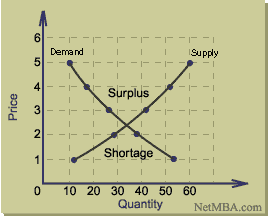
In a perfectly competitive market, firms will seek to lower their prices to maximize sales. As a market turns moves towards monopoly, the system becomes less consumer friendly. In a monopoly, firms seek to raise prices to maximize profits. Simple game theory will tell you that two competing firms, if they can come to an agreement, would both benefit from not engaging in price competition. This is good for the companies, but bad for the consumers who end up paying more to increase the company's profit margins. This is why the progressives went after businesses for engaging in oligopolistic practices like price floor. If a seller and a producer are allowed to agree on a price floor, there's little reason for preventing companies from agreeing on price floors with each other. The result would be price gouging of consumers and big profits for businesses. Should we be surprised then that the decision was made by the court's 5 conservative members. There's a reason they're there.

So, how did we get from the progressivism of the Warren Court, to the moderate reaction of the Rehnquist Court, to the 5-4 conservatism of the Roberts Court? There's an easy answer. In between 1932 and 1968 (36 years), the years that the Warren Court was built, the Democrats held the presidency for 28 years. In between 1968 and 2008 (40 years) the Democrats have held the presidency for 12 years. It's simply probability as to when justices are forced to retire. Of course, justices usually like to step down when they think their replacement will agree with him/her, which is why Clinton was able to appoint 4 justices. Still, the dominance of Republicans at the executive level has allowed conservatives to turn the court in their favor away from the judicial philosophy of the Warren Court. The result has been and will be decisions like those announced today.

Tuesday, June 26

Free Speech


Free speech and the first amendment have recently been in the news following some controversial supreme court decisions. Despite the fact that the decisions are considered to be conservative (basically because it was decided by the 5 conservative justices on the court: Roberts, Alito, Thomas, Scalia, and the swing vote Kennedy) I actually agree with the decisions. Without going into details, I'll just say that today's conservative justices are actually more intellectually coherent on the issue of free speech. The following post, however, has little to do with the court's most recent opinions. Instead, I want to look at the history of law regarding free-speech and suggest the direction that future rulings on the subject should go.

A good beginning would be the actual text of the 1st amendment: "Congress shall make no law respecting an establishment of religion, or prohibiting the free exercise thereof; or abridging the freedom of speech, or of the press; or the right of the people peaceably to assemble, and to petition the Government for a redress of grievances." As you can see, a lot of the 1st amendment deals with other issues besides free speech, namely freedom of religion (which will be covered in another post), freedom of the press, freedom of assembly, and freedom of petition. Of course some of those other issues deal directly with freedom of speech (freedom of the press, in particular). If one is to isolate the words related to speech, the text becomes 'Congress shall make no law abridging the freedom of speech.' Notice that these laws limit themselves entirely to acts of Congress. In other words, there are no restrictions on the states or the executive. Legal practice soon came to broaden the bill of rights by applying it all laws restricting Congress to the executive branch where it was constitutionally appropriate to do so.This was the limit of the constitution in terms of free speech until the Civil War. After the Civil War, 3 amendments were passed that broadened some protections against citizens. Specifically, Section 1 of the 14th amendment states "No State shall make or enforce any law which shall abridge the privileges or immunities of citizens of the United States." It was initially unclear exactly what privileges and immunities were meant to be included as protections. Eventually, through legal theory developed by Hugo Black (who ironically was a former KKK member) and instituted via the Warren Court, the 14th amendment became interpreted to cover the bill of rights as 'protections and immunities' from states granted to citizens.' In other words, the 1st amendment, for example, became broadened to include actions not just by Congress, but by the states as well. To conclude, supreme court ruling precedence and new amendments have pushed the 1st amendment to include rights that cannot be abridged by any government (federal, state, or local).

However, the court h
as also placed limits on free-speech. Believing that absolute free-speech could cause insurrection and/or criminal activity, the supreme court has searched for a formula that would protect the right, but also limit the most egregious activities. It is from this desire that the court upheld Wilson's Espionage and Sedition Acts (to some degree) in Schenck v. U.S. by invoking the idea developed by Justice Holmes and Brandeis that free-speech should only be limited when it presented a "clear and present danger." The example that became adopted in the popular understanding of the phrase, of 'shouting fire in a crowded movie theater,' is a highly misleading analogy. Instead, the "danger" refers to the danger of people engaging in criminal activity or endangering the republic. Under this ruling free speech can be curtailed if and only if the government can demonstrate that the speech would encourage criminal activity or hinder the Congress from carrying out its basic duties. As you can see, the movie theater analogy has almost no application to the latter guideline. Rather than shouting fire in a movie theater, the "clear and present danger" test applies to telling a soldier that the war he is fighting in is an unjust one because this may cause him to desert (both a criminal act and a hindrance to Congress's ability to carry out a basic duty, that is, waging war).

Schneck was decided in 1919, but the Supreme Court was still unsure of what the ruling meant. The Schneck case had been applied to a wartime scenario, thus it was unclear what the limits of free-speech were in peacetime. So, in Dennis v. US, the Supreme Court broadened limits to free speech. In this case, the court upheld the Smith Act, which outlawed subversive (communist) activities that threatened to overthrow the government. Justice Vinson argued that Congress has the right to prevent speech that may advocate for the overthrow of the government. As he argued, using vitriolic language, "''[o]verthrow of the Government by force and violence is certainly a substantial enough interest for the Government to limit speech. And in combating that threat, the Government need not wait to act until the putsch is about to be executed and the plans are set for action." Instead of merely identifying a "clear and present danger" the government had to demonstrate that such an insurrection was at least somewhat realistic or possible. In other words, a drunkard in Kansas could not be convicted under the Smith Act for saying he wanted to be King of America, but a communist party organizer saying that capitalism needs to be overthrown could be.

Thus, in the age of McCarthy, protections against infringements of free speech were at their lowest. In 1969, however, the Warren Court overruled the Dennis decision with Brandenburg v. Ohio, which is still the law of the land. In the case involving a KKK rally, the court completely rid itself of "clear and present danger" and instead installed a new test that linked abstract speech to action by requiring that any infringement on speech that uses the advocacy of violence or criminal action for its basis must demonstrate that "such advocacy is directed to inciting or producing imminent lawless action and is likely to incite or produce such action (stress added)." The key was now "imminent" danger rather than the unclear "clear and present danger" of a half century ago. The court did step back and add that such a strict defense could be reexamined in a condition of wartime (which was somewhat bizarre given that the nation was in the middle of the Vietnam war). Brandenburg serves as the test for free speech today.
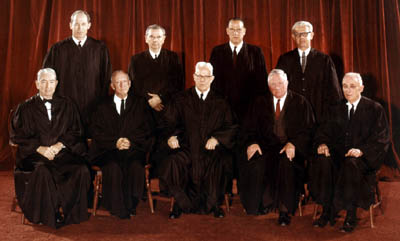
However, I believe that the ruling is flawed. Firstly, as the history I have ran through demonstrates, freedom of speech protections have been more dependent on the composition of the supreme court rather than on an abstract principle. This is alarming because this is not at all how the Bill of Rights were intended, nor is it a good way of administering law (if one doesn't know what is illegal, how can one avoid breaking the law). Instead, we need an absolute right to free speech. Secondly, the ruling quite directly opens itself to overrule during wartime. This is highly alarming since it is in a state of wartime that free speech is most often infringed. Before I begin tearing down Brandenburg, I should acknowledge the achievement of the Warren Court. Frankly, I think is perhaps the second greatest thing to happen to this country (my top four would be the Declaration of Independence, the Warren Court, Lincoln, and Franklin Roosevelt). The court dominated by Warren, Black, Frankfurter, Douglas, Fortas, and Brennan was bigger than any president and more drastic than any legislation. The Brandenburg case was a great step in the right direction and it successfully cast off the ridiculous rulings in Dennis and Schneck. With that said, the court missed a grand opportunity with Brandenburg. While better than its predecessors, the decision was seriously flawed. Part of the problem was the details of the case. Yet, the decision has remained the standard and now as the court turns more conservative there is little chance that it will be altered in the direction it should be.

The main fault with Brandenburg is that it failed to lay down a
firm protection of political speech. Political speech in any circumstances, unless it particularly advocates violence, should be permissible in all circumstances. Additionally, acts that are done for political theater, unless there is a reasonable reason for the act to be illegalized, should be allowed (burning draft cards should be legal, although not reporting for duty can be punishable.)There need not be any other restriction. Unfortunately, Brandenburg sets down several limits. For one, it refers to advocacy of "lawless action". Under these criteria, a government need only to illegalize any kind of protest, etc. to limit the freedom of speech of someone trying to organize a rally or a petition, for example. By including "lawless action" the decision leaves itself open to easy loopholing.
Secondly, by not making a distinction between political speech and non-political speech, the ruling pr
otects speech that doesn't need protecting.
Thirdly, the entire basis of limiting political speech, that people will be manipulated by demagoguery or
pushed towards insurrection, is retained. Such a basis, (as the term DEMAgoguery might suggest) is essentially anti-democratic. It rests on the idea that people are easily manipulated and can't make their own decisions. If this is true, then a democracy cannot function. In fact, the whole reason the founding fathers installed a right of free-speech is because they felt that all political expressions should be able to compete in the marketplace of ideas. If an idea is a good one it should be listened to, if it isn't, then it won't be. It is not up to any person, government, or group to decide which ideas are good. It is up to the people. It is remarkable that such a basic fundamental principle of democracy is easily cast aside. No matter how radical, racist, revolutionary, or conservative a speaker may be, he/she should be entitled to express their political opinions. As I mentioned there should be some limits to this, but only two: it should not be obscene if it is in a public place and it should not advocate violence (because this could directly endanger the lives of other citizens). Beyond those restrictions, there shouldn't be any as long as the speech is political.

Fourthly, th
e decision does not solve the problem of speech in wartime. Every major war in American history has been accompanied by severe curtailment of political speech. Under Adams there were the Alien and Sedition Acts (and there wasn't even a war), under Lincoln there was his suspension of habeus corpus and his handling of C.L. Vallandigham (for my abridged history paper on this subject, go here), in World War I we had the Espionage Acts, in World War II we had Japanese internment, in the Cold War we had all sorts of restrictions including the Smith Act, Taft-Hartley, and HUAC, and today we have the Patriot Acts. In each case, speech was restricted needlessly and with each case (with the exception of the Patriot Act) historians have almost unanimously condemned those restrictions. They did so with reason. Governments have pushed for restrictions of on freedom of speech in wartime not because they needed to, but because they could. Since I'm talking purely about political speech (as opposed to revealing troop positions, for example), free speech has no military relevance. Realizing this, most governments claim that free speech hurts troop morale. Well, if troops are willing to die for freedom, perhaps they'd be willing to put up with it. The final rationale, that free speech decreases support for the war is nonsensical. Of course it decreases support for the war; that's exactly its intention. In case our leaders have forgotten, the United Stats has been involved in plenty of crazy unjust wars. It is the right and duty of citizens to challenge the moral righteousness of any war. The morality of war is decided by the people in how they express themselves and how they vote (and also by historians), not by the government. The former means freedom of expression, the latter can only be fairly accomplished with freedom of expression. Thus, absolute protection of political speech cannot be a side issue dealt with in the future, as it is in Brandenburg. If it is absolute, it must be that. It must not be open to negotiation during wartime, but most fully practiced during wartime. The insanity of our current war testifies to the need of citizens to speak their mind. After all, our ideas can't be any crazier than our present administration's.