skip to main |
skip to sidebar
 According to the President of the United States we are in a "war against terror." However, there is significant question as to what he's talking about. Not only is our supposed enemy elusive, but so is how we define who or what we're fighting. Some might argue that Bush is using a term defined as one thing to describe something else for the purpose of simplicity. Otherwise, the "War on Terror" would become a sentence or a paragraph rather than a slogan. That may be, but in the name of simplicity, Bush has also confused what the war is about with the specific intent of gaining more support for himself while simultaneously deflecting his critics into a position that they do not hold. In other words, it's bigger than semantics.First, we must assume that Bush wants a "war on TERRORISM" rather than "TERROR." Terror just means fear, and it would be rather difficult to fight fear, especially with armed soldiers. Another definition of "terror" relates to a totalitarian state's use of fear to quell opposition (as how the term was used in the French and Russian revolution). Apparently, Bush is not fighting this either because very few states expressly use "terror," and those that do (Uzbekistan, North Korea, Burma) are not at war with us.Thus, we need a definition of "terrorism." In fact there are several definitions (some linguists say as many as 100 separate definitions) that could be used. Here, I will rank 7 of them from the most accurate and general meaning of the word to how it's used more colloquially and specifically:
 1. The systematic use of terror especially as a means of coercion (Websters)2. The use of violence and threats to intimidate or coerce, especially for political purposes. (Dictionary.com)3. peacetime equivalent of a war crime (Alex Schmid, terrorist "expert")4. any act intended to cause death or serious bodily harm to civilians or non-combatants with the purpose of intimidating a population or compelling a government or an international organization to do or abstain from doing any act (UN) (alsoe see US criminal code: …activities that involve violent… or life-threatening acts… that are a violation of the criminal laws of the United States or of any State and… appear to be intended (i) to intimidate or coerce a civilian population; (ii) to influence the policy of a government by intimidation or coercion; or (iii) to affect the conduct of a government by mass destruction, assassination, or kidnapping).5. the intended use of violence against civilians (news media)6. acts perpetuated by groups that despise freedom and pursue totalitarian aims (paraphrasing Bush)7. Middle Eastern Islamic fundamentalists who use suicide and car bombs on American civilian and non-civilian targets. (colloquial)As you can see there is quite a bit of discrepancy. Different definitions mean fighting different things. Interestingly, only the 7th applies to what we're actually doing.Let's go through them. The first is the most broad, but it doesn't include its uses for politics and its relationship with casualties. Under this definition, a sibling or a parent could be considered a terrorist, thus it's not particularly useful.The second definition brings in politics, an important step. However it doesn't include civilians. Thus, any war or even a legal system could be defined as terrorism. In other words, it's not particularly accurate.The 3rd definition brings in the notion of war crimes, which has a whole literature of its own. I actually like this definition as a kind of shorthand. The only problem is that war crime laws are entirely based on the idea that you are fighting a declared enemy and so include things like misusing a flag of truce, etc. It would also include oppressive acts by states against their own citizens, which I do not consider terrorism. Of course, this is not what the "war on terrorism" is about because...well, we're at WAR with them.The 4the definition, especially the UN part, is considered by most to be the best definition. There is a addendum to this definition written by Schmid here, which goes into even greater detail. For me, this is the best definition of the term available and the one I use. Ther
 e are a few reasons why this is not what the "war on terrorism" is about. One, under the definition we might be guilty of terrorism, if nothing else than from our "shock and awe" campaign at the beginning of the Iraq occupation that killed many civilians. The only question is whether we "intended" to kill them. Also, our treatment of non-combatants, from Abu-Gahrib to torture facilities in Romania and Egypt (and possibly even at Guantanamo) would also put us in the terrorist camp. And of course, there is the whole issue of us being a regime of terror, given our somewhat recent history of using terrorism as defined in this way: in Chile in 1973, in Nicaragua in the 1980s, several acts against Castro and Cuba, and specific acts in Vietnam (like the My Lai massacre, for example) (this is not to mention the actions of Sherman in the Civil War or the the rebels of the American Revolution). Obviously, we can't be fighting ourselves, so this can't be what is meant by a "war on terrorism."The sixth definition, provided by Bush when confronted with this question, would be cute if it wasn't so trite. Essentially, Bush is trying to make the "war on Terrorism" into the Cold War, Part II: Cruise Control. The definition he gives for terrorism is the same definition Cold Warriors gave to communism. Unfortunately for him, terrorism isn't communism and if he thinks it is, then we're in a lot of trouble. I'll spare you a long discussion of Cold War history and the theories of Marx, Lenin, Ke
 nnan, and Reagan, and just point out that a definition of communism does not stand up as a definition of terrorism. If we look at actions that are universally considered terroristic, like those perpetuated by the Mau-Maus, the FLN in Algeria, the Sturm Gang and Irgun in Israel, the PLO in Palestine, and Hezbollah in Lebanon, you'll notice that they all were not that concerned with establishing 'totalitarianism' (although some did lean in that direction), and rather than disdain freedom, all of the above mentioned groups were trying to get independence from something. In fact, the only time terro
 ristic acts would fit under this definition is when they were committed by communists, as in the Vietnam war. This is not the definition we actually use in our "war on terrorism" because, well, we're not trying to overthrow communist governments anymore (China's ok now because they sell us stuff) and we are actually allied with a number of groups that easily fall under this definition of "terrorism" (namely the Saudi royal family, Uzbekistan, and Pakistan, to name a few.)This leaves us with the last definition, which happens to be exactly who we're fighting. Of course, the administration has pretended that terroristic groups across the world are being targeted, from FARQ in Columbia to ETA in Basque Spain, but in reality we haven't done much in these areas. We won't be invading Columbia any time soon. There are two issues that should be contemplated considering that this is the definition we are using for the "war on terrorism":A. This is a terrible definition of terrorism historically and analytically.B. Is this group worth targeting for a Cold War, Part II type of confrontation?
 If you answered yes to part B you might just be a redneck...I mean a supporter of the "War on Terror" (sorry, bad joke). Now, if you think these groups need to be confronted everywhere for several generations, that's a perfectly valid viewpoint. Certainly, terrorism according to the 7th definition is a horrible phenomenon that can be directly blamed for the attacks on Sept. 11. Perhaps, then, you think the "war on terror" is a good idea being poorly implemented. Fair enough, I don't particularly disagree, although I question how a war will solve the problem (perhaps an honest glimpse of their grievances could be examined just for the sake of curiosity). At least now, though, you know what is meant by a "war on terror" and you won't be confused by what it isn't.
 So, what isn't it? An overthrow of Saddam would fit nicely under this category. Well, Saddam was a Middle Easterner. However, he was not an Islamic fundamentalist (in fact he was a pretty stern secularist). He also never targeted the United States in any attack except during the Persian Gulf War and he did not have anything to do with Osama Bin Laden and the rest of those who planned/executed the attacks on Sept. 11. Well, then, perhaps the occupation of Iraq had nothing to do with the "war on terror," which it didn't. So, why does Bush keep bringing it up?Bush uses the refrain of a "war on terrorism" for two reasons: One, he has made Iraq into a battleground for the war on terror with his disastrous overthrow of Saddam. Thus, it actually makes sense to use it NOW with Iraq. Second, by using the term Bush has taken credit for a war he has done almost nothing to fight. By this I mean not that he hasn't strapped on a machine gun, but that under Bush, the United States has done almost nothing effective to fight "terrorism" as defined above outside of invading and occupying Afghanistan. Ironically, then, Bush and his associates have called those that criticize his "war on terrorism" as being "soft on terrorists," when Bush has done nothing substantive to decrease the amount or power of "t
 errorists" in the middle east (quite the contrary). It's not because he doesn't want to (probably), it's because he's spent all his time and military on preventing Iraq from becoming the ultimate "terrorist" super state, a possibility he single-handedly created.With a ridiculous misnomer for his current policies, Bush has used the "war on terrorism" to protect himself from attacks of being "soft on terror," which he is. It's what George Orwell called doublespeak.
 As you may know, the present military strategy in Iraq is to increase the troop levels for several months, stabilize the country, and then exit. The surge is ramping up and will be in full force by the beginning of July and will last until late September.
However wonderful the scenario sounds, it is complete fiction. The plan will not work. At best it will result in failure, at worst it will result in escalation, more troops in Iraq (which means more American deaths), and the only plausible course for success to be a military draft.
To understand why the plan will fail, we must first, as with everything, consider the history. Let's go back to the beginning of the problem: when the administration and the world realized that the invasion of Iraq was a complete disaster. It was actually a double disaster in that there were no WMDs, making the war meaningless and insane, and also we were not exactly greeted as liberators. The lack of WMDs made the war tragic, the insurgency made the war a quagmire. Despite their stupidity, the Bush administration finally, although belatedly, accepted that the insurgency was real, that they were unprepared to deal with it and the emergence of a sectional conflict, and that any occupation would be tough to enforce (and costly) and complicated to end. With this realization came a new plan from the Pentagon. Donald Rummsfeld , after discarding the whimsical notion of a quick occupation followed by a flowing democracy while Iraqi oil reserves paid the bill, developed the plan, with Gen. Casey, of "decreasing the footprint." The "footprint" refers to the area that U.S. forces would be supervising and placed in harms way. The idea of "footprint" is both geographical and institutional. Rummsfeld wanted to gradually move American forces out of safe spots and into the most needed trouble zones until, finally, the Iraqi security forces were able to handle the entire country. He also wanted to pass on authority from American military personnel to Iraqi civilians.
Unfortunately for everyone, the "decreased footprint" plan was as unsuccessful as it was ill-conceived. After about 3 years of implementation (from 2003 to Nov. 2006), the United States was no closer to exiting, the country was as dangerous as ever (if not more dangerous), and Iraqi forces were in no position to take over security responsibilities of any type. In reality, there was no se cret as to why the plan had failed. 150,000 troops was wildly insufficient to quell a growing insurgency and train the Iraqis. If there weren't enough troops to stabilize the country and stop people from looting when it was relatively stable (immediately following the invasion), then how could there be enough to handle a growing civil war increasingly mobilizing more distraught people and being funded from international terrorist organizations (like Al Quada) and national governments (Syria and Iran)? I say it was no secret, because this is exactly what the military's top brass was telling everyone (everyone except Congress, that is). So why was it pursued for so long? Two reasons: One, Rummsfeld wanted to get out of Iraq as quickly and cheaply as realistically possible. The insurgency was an embarrassment to him and it was costing the pentagon a lot of money. All the while, he didn't want to admit that the invasion was a mistake, that the American army was unprepared to deal with an occupation, and that his generals had been correct in advising that a true occupation force would need about 500,000 troops (Vietnam?) Two, Bush (or to be more precise, Karl Rove), thought that by promising and maintaining a lighter "footprint" the war as a political issue would be avoided. Bush thought he
 could win on domestic issues combined with grand-standing about vague notions like "terrorism" while Iraq was left as a sideshow with little importance. He thought he'd be able to do this, because no one on the opposition had any realistic defined proposal beyond total, immediate withdrawal, which was politically unpalatable. And so he did in 2004.
We all know why the "decreased footprint" idea was abandoned. The day following the 2006 November midterm elections, Bush announced Rummsfeld's resignation and with him his strategy in Iraq. The election had been a disaster for Republicans and was largely seen as a reaction to Bush's strategy in Iraq. Those on the left just wanted out and those on the right just wanted to win. I remember Bush's press conference well: I was struck by the president's humility and encouraged that the election had forced Bush to fire Rummsfeld. However, I was a little apprehensive. I had always considered Rummsfeld as a scapegoat for everything with the Iraqi war, from Abu Gahrib to the actual invasion when the real blame should have been placed with Cheney and Bush. I figured that by removing Rummsfeld, Bush was losing a lightning rod more than anything. I just hoped that the decision wouldn't allow Bush to wash his hands of all the problems in Iraq.
As it turned out, my first surprise was justified: Bush was a little TOO humble during that news conference. He was putting on an act of being beaten ; of being pushed by the electorate towards a new course. In reality, the election allowed Bush to distance himself from an old faulty policy and embark on a new one, which was something he was probably aching to do for almost a year. Ironically, the departure of Rummsfeld, an easy target for Democrats, represented a further commitment to Iraq and the end of a policy that included disengagement.
The new policy, as we heard in early January, would be a troop surge. There are two ways to look at the surge: believe that the president's plan is genuine or cynically believe that it is a planned babystep towards escalation. I'll leave it up to you decide which you believe. (more on that later)In any case, the announcement of the surge was immediately met with consternation. Those on the left asked how more troops would help us find a way out while those on the right questioned if 30-40,000 more troops could really make a difference (and if so, why not 20 or 50 thousand?). The reason for its confusion is that it was badly explained by both the news media and the administration. The news media didn't explain it because they're incompetent and it doesn't lend itself to soundbytes beyond "Bush announces surge plan," etc. The administration made no effort to genuinely inform the public because they knew the plan would have little impact and was easily prone to obvious failure. The failure of the administration to adequately explain the proposal should set off red flags. Because they know it will probably fail, they will probably argue that the reason for the failure was not enough troops. The "exit strategy" will mean more troops, longer tours, and possibly even a military draft (if a conservative is elected in 2008 with a mandate for such a drastic measure).
At this point you might be asking, 'what is the plan?' Most summations of the strategy have been that the army will send in a bunch of troops to smash the insurgency, damper growing sectional conflict, and quickly come home, presumably by the end of the year. This is not the plan. The plan was born from past experiences and a  change of military leadership. Although large areas of Iraq, especially those with mixed sunni/shia populations (like Baghdad), are in a state of proto-Civil War, some mixed areas have been stabilized. The success areas are those in which American security forces have been able to install martial law and remove/keep out the sectarian gangs. Also, because of a large presence in these areas, the American military has worked with the civilian population and gained their trust. The prototypical example is the now somewhat spectacular stability of Tal Afar. It is from Tal Afar that new commanding general in Iraq, Gen. Petraeus, has gathered his advisors. With the ousting of Rummsfeld came the ousting of Gen. Casey. In his place, Gen Patraeus, who holds a PhD. from Princeton, organized and pushed for the new surge strategy. It was his immediate subordinates who sold the surge plan to Bush in Nov. and Dec of 2006. The plan they proposed was to turn Baghdad into Tal Afar by concetrating a large American force (about 25 to 30,000 troops) in heavily disputed neighborhoods in the capital city. They hoped, or declared, that stability in the most highly charged areas of the city would spread out to the rest of the city. In turn, Baghdad would serve as a launching pad for the new Iraqi government to establish their authority and eventually quell the provinces if nothing else than by leading by example. To stabilize central Baghdad, the American military would need those extra 30,000 troops, which could only be found by manipulating the rotation system for active duty for a couple of months and selling the idea of a "surge" to congress.
To review, the surge is so small because it will apply to only a few neighborhoods in Baghdad. Its success can be judged in September. But analysts are quick to point out that the plan has serious problems. One, stabilizing a small area in Baghdad will not neccessarily halt sectarian violence in the rest of the city. Groups will probably move away from the "hot" zones in Baghdad to previously more stable areas and continue their violence there. Two, the idea that peace in one city will somehow spread to outlying areas is little more than a leap of faith. Such a scenario has proven itself several times in military history to never occur (most relevantly here, in Vietnam and Alfghanistan). Isurgents merely move to the countryside and continue their attacks there. Most planning of attacks, including gathering weapons and building bombs, already occurs in the hinterland of Baghdad. How would the surge put a stop to this. Three, once the surge ends, in the beginning of October, there is little guarantee that violence will not recommence. In fact, many groups may just hide out the few months that the Americans have a larger presence, especially in those areas of Baghdad. Additionally, it isn't clear how Iraqi forces are supposed to trained in these magical three months when there hasn't been success in that area for 4 years.
Now to the question of what the surge means for the larger occupation. In reality, it is difficult to analyze the long-term effects of the surge without some idea of Bush's thinking process (the genuine vs. cynic choice I mentioned earlier). Going with the assumption that the surge will fail in its larger goals, if not its small goals of pacifying a few neighborhoods in Iraq, there are two courses of action. One, assuming that Bush is embarking on this plan in a genuine effort to win the war, then Bush himself will be faced with two options: cut his losses and leave because to win the war would not really be worth it or fully commit the United States to the occupation of Iraq, which would require a military draft and an occupation force of about 500,000 (the same size of force that failed in Vietnam, by the way.) Two, assuming that Bush is using the surge to introduce the American people to the idea of sending more troops, Bush will continue to call on more troops, not unlike Johnson during Vietnam, and pass the problem on to the next president who will then be faced with either withdrawing or full-engagement. As you can see, the options are limited and it doesn't matter too much what Bush's rationale is. The results will probably be comparable.
I hope that all voters in the 2008 election consider the scenarios available. I know full well that packing up and leaving from Iraq would be a disaster. Undoubtedly, it would lead to a bloody civil war and possibly genocide. The nation would serve as a breeding ground and safe-haven for terrorist organizations. It would destabilize the entire region and put oil reserves in danger. It would also display American weakness.
With all of the above in mind, I believe it's time to come to terms with our...umm...redeployment away from Iraq. My first reaction was that we, as a nation, had a responsibility to "stay the course" and establish democracy in a nation we had invaded for that purpose. However, I could neither die or kill for such a purpose. As a man of my age it would be intellect ually dishonest of me to push for continued occupation if I were unwilling to do the occupying. Aside from my personal ethics, there is the larger lesson of Vietnam. The United States could never realistically win in Vietnam, even with a fully mobilized military. We cannot win in Iraq without a fully mobilized military. Perhaps we can win with one, but is it worth taking the chance? In 1969, Richard Nixon took office and had the opportunity to end the war with the same terms he would sign 4 years later. In between, 25,000 Americans (half of the deaths in Vietnam) were killed in the Southeast Asian quagmire. Was it worth it? Will it be worth it to sacrifice more American lives for the same result just because we can't come to terms with the psychological effects of losing? One of the problems with getting out of Vietnam is that many families could not handle that their husbands/sons/fathers had died for no purpose. Luckily, we are at a stage when the military deaths are such a small percentage of our population that the impact of the war has not really affected most families (even those with members serving). We should take advantage of that situation and withdraw as quickly as possible before more families are destroyed. It is time to leave Iraq.
go to its new and improved address at:http://thegreatestthoughtsevercontrived.blogspot.com/This address is now the home of a new, much less entertaining blog in which I engage in serious (a.k.a. boring) discussions of a variety of topics, usually political.Please adjust your bookmarks accordingly.


 e are a few reasons why this is not what the "war on terrorism" is about. One, under the definition we might be guilty of terrorism, if nothing else than from our "shock and awe" campaign at the beginning of the Iraq occupation that killed many civilians. The only question is whether we "intended" to kill them. Also, our treatment of non-combatants, from Abu-Gahrib to torture facilities in Romania and Egypt (and possibly even at Guantanamo) would also put us in the terrorist camp. And of course, there is the whole issue of us being a regime of terror, given our somewhat recent history of using terrorism as defined in this way: in Chile in 1973, in Nicaragua in the 1980s, several acts against Castro and Cuba, and specific acts in Vietnam (like the My Lai massacre, for example) (this is not to mention the actions of Sherman in the Civil War or the the rebels of the American Revolution). Obviously, we can't be fighting ourselves, so this can't be what is meant by a "war on terrorism."
 nnan, and Reagan, and just point out that a definition of communism does not stand up as a definition of terrorism. If we look at actions that are universally considered terroristic, like those perpetuated by the Mau-Maus, the FLN in Algeria, the Sturm Gang and Irgun in Israel, the PLO in Palestine, and Hezbollah in Lebanon, you'll notice that they all were not that concerned with establishing 'totalitarianism' (although some did lean in that direction), and rather than disdain freedom, all of the above mentioned groups were trying to get independence from something. In fact, the only time terro
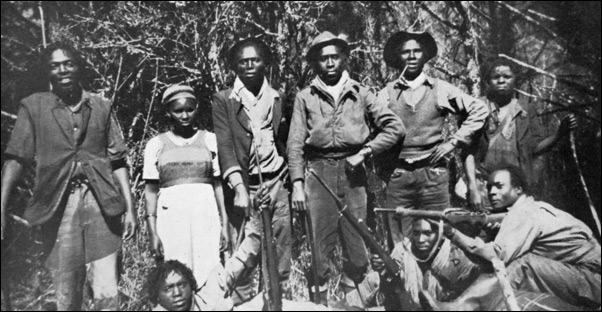 ristic acts would fit under this definition is when they were committed by communists, as in the Vietnam war. This is not the definition we actually use in our "war on terrorism" because, well, we're not trying to overthrow communist governments anymore (China's ok now because they sell us stuff) and we are actually allied with a number of groups that easily fall under this definition of "terrorism" (namely the Saudi royal family, Uzbekistan, and Pakistan, to name a few.)


 errorists" in the middle east (quite the contrary). It's not because he doesn't want to (probably), it's because he's spent all his time and military on preventing Iraq from becoming the ultimate "terrorist" super state, a possibility he single-handedly created.With a ridiculous misnomer for his current policies, Bush has used the "war on terrorism" to protect himself from attacks of being "soft on terror," which he is. It's what George Orwell called doublespeak.